
?Can a single object at our doorstep change how we feel about home, about the small rituals of leaving and returning, about the way we check for a delivery or answer a knock at night?
This image is property of Amazon.com.

First Impressions
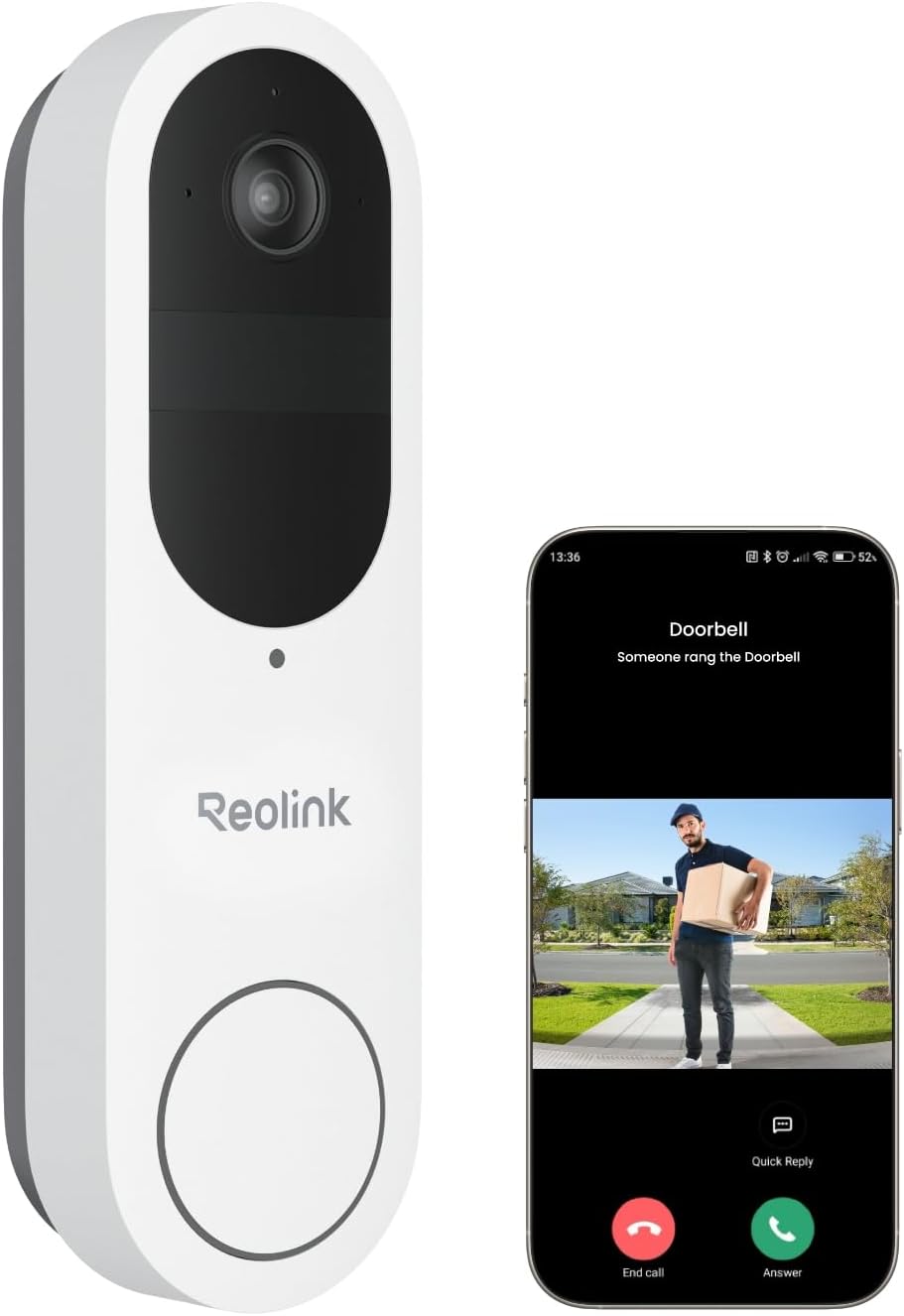
We unboxed the REOLINK Wireless Video Doorbell Camera, Battery Version, 2K 150°x150° Head-to-Toe View, 2.4/5 GHz Dual-Band WiFi, Person/Vehicle/Package Detection, Two-Way Talk, No Monthly Fees (Chime not Included) with the same gentle curiosity we bring to a new lamp or a pot of seedlings. The unit looks compact and well-made, with a reassuring weight and a finish that seems built to withstand weather and the small violences of daily life.
REOLINK Wireless Video Doorbell Camera, Battery Version, 2K 150°x150° Head-to-Toe View, 2.4/5 GHz Dual-Band WiFi, Person/Vehicle/Package Detection, Two-Way Talk, No Monthly Fees (Chime not Included)
$95.99 In Stock
Design and Build
We notice a careful economy in the doorbell’s design that echoes the domestic objects we trust: nothing ornate, everything intentional. The housing feels solid and weather-resistant, with mounting hardware that is straightforward and unobtrusive, the way a well-designed object quietly becomes part of a threshold.
Materials and Weather Resistance
We can see that Reolink has used plastic that feels dense and durable, along with a lens and infrared elements that sit flush against the plate. The materials suggest it will endure rain, wind, and the sun that bleaches front porches over years, though prolonged exposure will always test any finish.
Form Factor and Aesthetics
We appreciate a design that does not shout for attention; it is small enough to sit beside a porch light and look purposeful without vying for aesthetic dominance. For households sensitive to curb appeal, this is a doorbell that blends into the domestic tableau rather than disrupting it.

Key Specifications
We like to see the technical claims laid out plainly, so we can translate them into expectations for daily life. Below we set out the principal specifications so we can return to them when assessing performance.
| Feature | Specification |
|---|---|
| Product Name | REOLINK Wireless Video Doorbell Camera, Battery Version, 2K 150°x150° Head-to-Toe View, 2.4/5 GHz Dual-Band WiFi, Person/Vehicle/Package Detection, Two-Way Talk, No Monthly Fees (Chime not Included) |
| Resolution | 2K (4MP) |
| Aspect Ratio | 1:1 (square) for head-to-toe framing |
| Field of View | 150° x 150° |
| Night Vision | Infrared night vision (clear nighttime capture) |
| Detection | Person, Vehicle, Package (Smart Detection) |
| Alerts | Free Rich Notification plan: up to 25 image alerts/day |
| Video Call | Real-time video call (iOS only) |
| Storage | microSD up to 256GB; compatible with Reolink Home Hub (not included) |
| Power | Battery-powered or hardwired; supports DC 24V, AC 8–24V, 5VA–40VA transformers |
| Charging | Fully charges in ~4 hours with 5V 2A Type-C charger |
| Battery Life | Up to ~5 months per charge (lab test: 20 events/day, 8s each) |
| Continuous Recording | Not supported 24/7 |
| Connectivity | Dual-band WiFi (2.4/5 GHz) |
| Compatibility | Not compatible with third-party NVRs; recommends Reolink NVR |
| Smart Home | Works with Alexa and some other smart devices |
| Monthly Fees | No monthly fees for basic local storage/alerts |
Video and Image Quality
We are drawn first to how images feel: the detail in a visitor’s face, the contour of a package left at the step, the way the evening light outlines a bicycle. The REOLINK delivers 2K resolution images that translate to clear footage, and that clarity matters in small, domestic moments when we want to know whether a delivery sticker has been attached or whether a neighbor’s child has arrived for a playdate.
2K Resolution and 1:1 Aspect Ratio
We spend more time with a 1:1 aspect ratio than we expected, because it frames a person from head to toe in the doorway with the kind of attentiveness we reserve for someone in our own hall. The 4MP sensor captures textures—the weave of a jacket, the label on a parcel—so identifying details are easier without pixel hunting.
Night Vision Performance
We rely on night vision the way we rely on streetlamps: it’s not something we scrutinize until it fails to do its quiet job. The doorbell’s infrared night vision manages contrast well, providing recognizable facial features and package outlines even under muted porch lighting. There are limits—faces at a distance lose definition, and busy backgrounds can bleed light—but for typical porch distances the camera holds its own.
This image is property of Amazon.com.

Field of View and “Head-to-Toe” Perspective
We find the 150° x 150° field of view generous and intimate at once; it frames a visitor in a way that feels like a conversation rather than surveillance. The square framing addresses a common problem with conventional doorbell cameras that crop out packages at the base of the frame, making this a sensible choice for households that receive frequent deliveries.
Audio and Two-Way Talk
We have conversations at our front door that are part courtesy, part negotiation, and part exchange of the small messes of life: “Can you hold that package?” The two-way talk function lets us speak clearly with visitors and couriers. In real use, the audio fidelity is adequate, with a little compressed character over the connection, but overall intelligible enough to transact the day-to-day.
Real-Time Video Calls and Quick Replies
We appreciate the option for real-time video calls, though it is limited to iOS users—an important constraint for households split across platforms. Pre-recorded replies are useful for recurring situations (instruction for leaving packages, for example) and they help us manage encounters when we cannot answer live.
This image is property of Amazon.com.
Smart Detection and Notifications
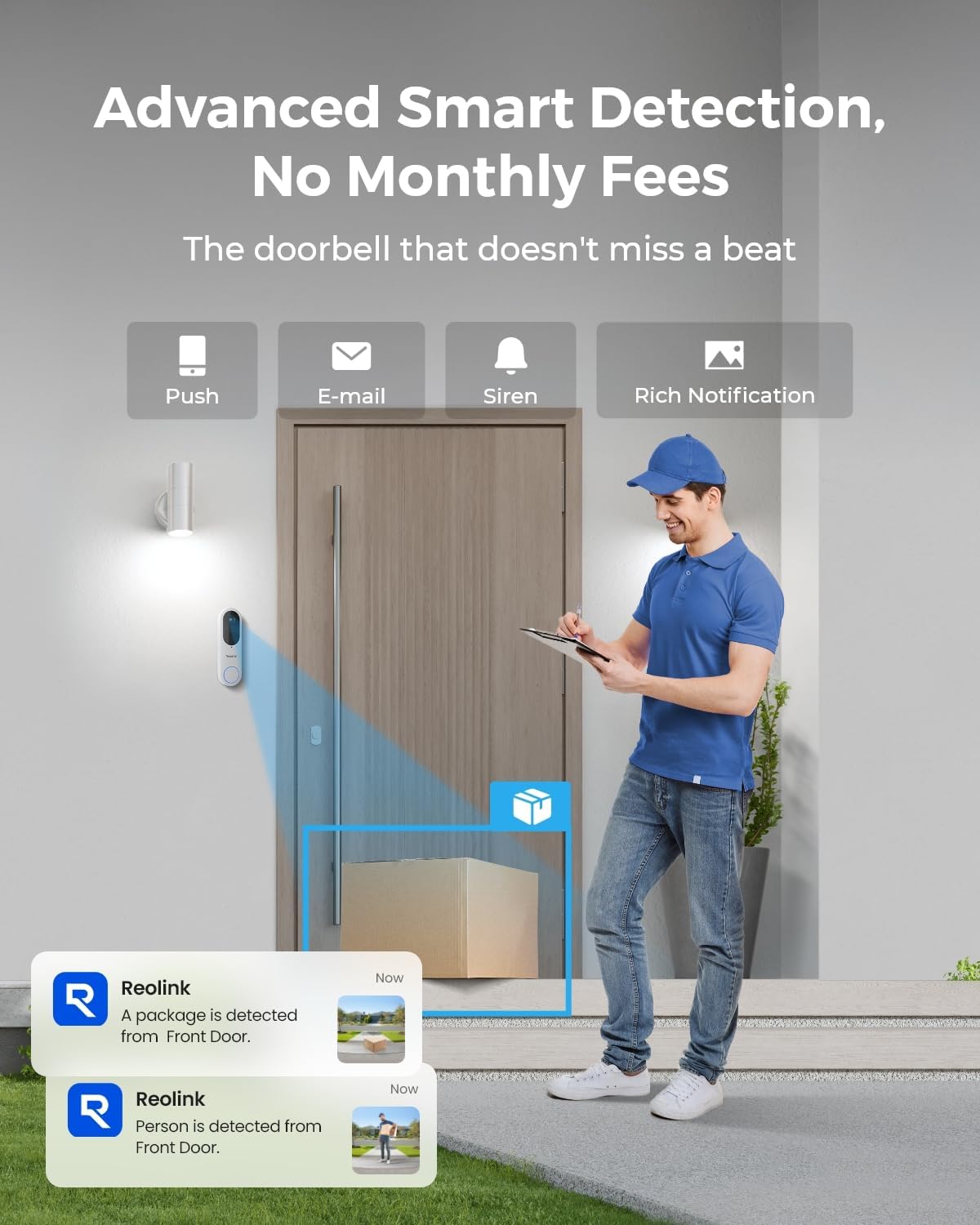
We rely on detection systems to surface the moments that truly matter—the person approaching, the vehicle pulling up, the package left in the rain. Reolink’s Smart Detection separates people, vehicles, and packages, reducing the noise of motion-triggered alerts from a tree branch or a passing cat.
Person, Vehicle, and Package Detection
We find the person detection to be most reliable; it recognizes human silhouettes and reduces false alarms from small animals. Vehicle detection works well at driveways and curbside drop-offs, and package detection is particularly useful for parcel-heavy periods, though it can occasionally misclassify objects if the package is partially obscured.
Rich Notifications and Video Calls
We like the free Rich Notification plan that offers up to 25 image alerts per day through the Reolink app—enough for most households to feel informed without being overwhelmed. For households with many visitors or deliveries, the limit may require prioritizing which alerts truly matter, and the iOS-only video call feature means Android households might miss a convenient real-time interaction.
Connectivity and Compatibility
We appreciate having choices in how the camera joins our home network—and the doorbell supports both 2.4 GHz and 5 GHz bands. That dual-band support means fewer connectivity headaches in homes where certain bands are congested, though wall placement and WiFi strength still dictate real-world performance.
Dual-Band WiFi Performance
We find that a stable 5 GHz connection improves responsiveness and reduces latency in live view; however, 2.4 GHz often penetrates walls better for thicker, older homes. Choice matters because interference and range problems are the silent saboteurs of many smart-home promises.
Smart Home Integration and Ecosystem
We like that the doorbell works with Alexa and some other smart home devices, allowing us to incorporate it into routines or voice queries. A caveat: the doorbell is not compatible with third-party NVRs, and Reolink advises using their own NVR for full compatibility, which may matter to households already invested in another ecosystem.

This image is property of Amazon.com.
Power and Battery Life
We take comfort in having multiple power options: a rechargeable battery for wire-free installation and the option to hardwire for constant power. The flexibility is meaningful when we think about rental homes, older houses without chime wiring, or simply the desire to place the camera exactly where we want it.
Battery Charging and Wired Mode
We notice that when wired, the doorbell is charged indirectly through the battery, a setup that can feel counterintuitive but works to maintain the battery while providing power for normal operation. This means that wiring offers continuous replenishment rather than a bypass of the battery system, which may affect expectations about how “always on” the device can be.
Charging Time and Battery Longevity
We appreciate that a full charge takes about four hours with a 5V 2A Type-C charger, which feels manageable for periodic maintenance. The manufacturer’s claim of up to five months per charge is based on moderate usage (20 event recordings of 8 seconds per day); heavier usage, frequent live views, or a cold winter will shorten that window, so we plan accordingly.
Storage and Privacy
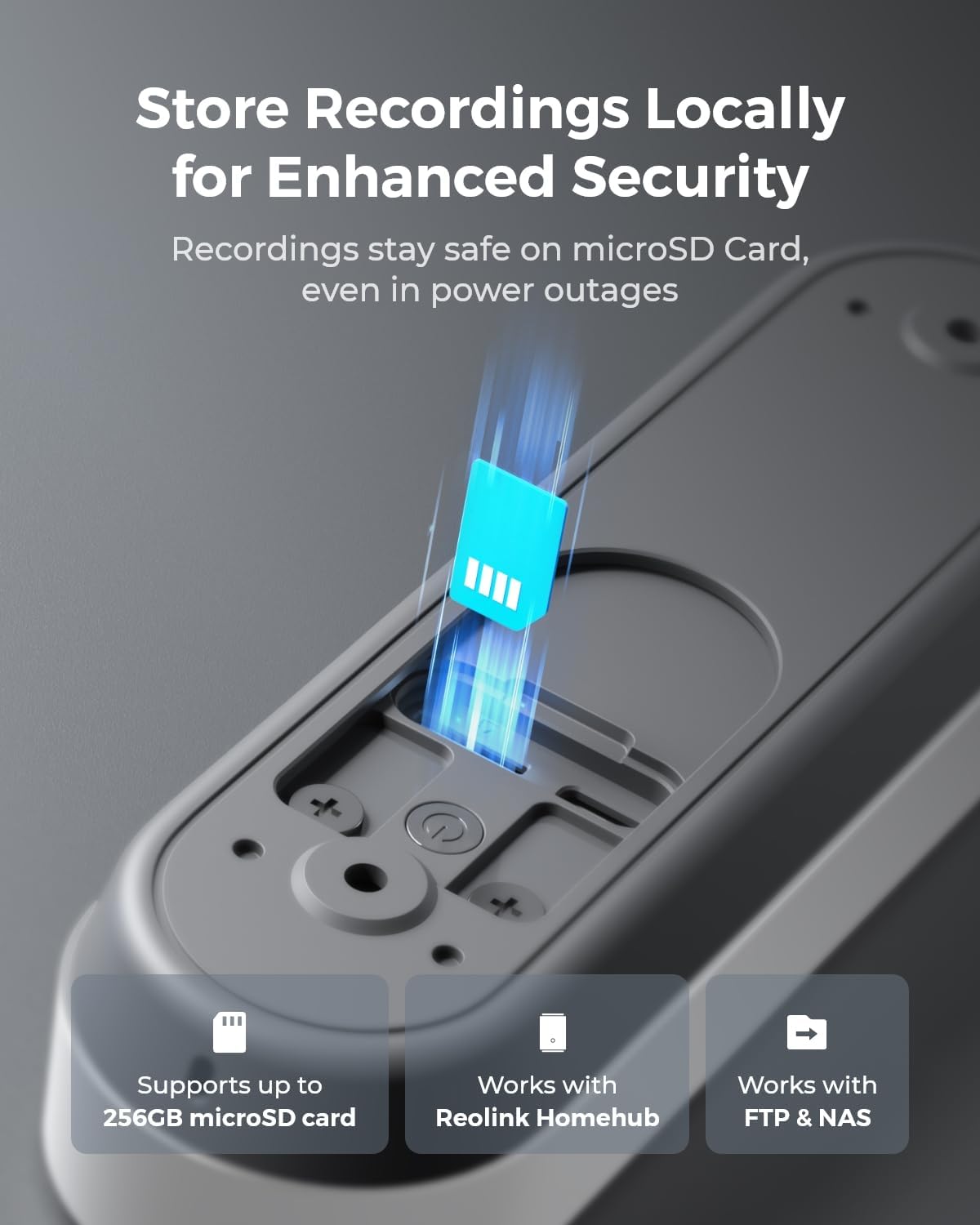
We prefer local storage for its tangible control: a microSD card in the device gives us a physical archive that sits in our hands, not on a subscription server. Reolink supports up to 256GB of on-device microSD storage and the possibility of expanded storage through a Reolink Home Hub for households that want more extensive archives.
Local Storage Options
We like that local storage keeps our footage under our control and avoids monthly fees, but we also recognize the trade-offs: if someone steals the doorbell or it’s damaged, those local files could be lost unless backed up to another device. Using the Home Hub means keeping footage within a Reolink-managed, local system that still avoids cloud subscription fees.
Privacy Considerations
We are attentive to privacy: a doorbell camera records the public and semi-public space at our porch, which invites questions about neighbors and passersby. We urge thoughtful placement, clear visible notification where required by local regulations, and respectful use—recording should protect our home without intruding into the lives of those who pass by.

This image is property of Amazon.com.
Installation Experience
We set aside a quiet hour on a weekend to install the doorbell and found the process accessible to someone with modest DIY instincts. The instructions are clear, the hardware minimal, and the physical act of mounting felt less like a technical chore and more like adjusting a piece of a household system.
Steps to Install (Overview)
We begin by pairing the device to the Reolink app, choosing wired or battery mode, and selecting a location with a strong WiFi signal and good field-of-view of the porch. Mounting requires only a drill and basic tools, and the package includes angled mounts for situations where our doorbell sits on a recessed or sidelong surface.
Connecting to Existing Chimes
We find that if our home has mechanical chimes, wiring the doorbell can allow it to ring the chime as intended, and the device supports a range of voltages (DC 24V, AC 8–24V, 5VA–40VA transformers). The caveat is that wiring charges the battery indirectly and requires some attention to our home’s transformer specifications; some setups will demand a modest electrician’s patience.
Chimes and Alerts
We like having options for audible alerts inside the house, although the physical chime is not included with the camera. Reolink offers several chime options through their app, and when wired correctly, the doorbell will work with existing mechanical chimes so we don’t lose the familiar ding-dong.
Choosing a Chime
We consider whether we prefer a soft, domestic chime or something more insistent; the app allows us to tailor the tone. For households where many people live in different parts of the house, pairing the doorbell with an external chime may keep everyone aware without depending solely on phones.

This image is property of Amazon.com.
App and User Experience
We spend a lot of time in the app because that’s where the camera’s personality—its timeliness, its alerts, its archive—becomes part of our daily routine. The Reolink app is intuitive, with straightforward toggles for detection zones, notification frequency, and quick-reply messages.
Setup and Daily Use
We find setup straightforward: create an account, connect to WiFi, and configure detection settings to reduce false alarms. For daily use, the app’s live view is responsive most of the time, though live streaming for extended periods is not supported due to design choices that limit continuous recording.
Rich Notifications and Limits
We appreciate the free Rich Notification plan offering up to 25 image alerts per day, which is generous for many households but can be limiting for heavy traffic doorways. The limit forces us to consider what we truly need to be notified about and to tune detection sensitivity so that we receive meaningful images rather than a flood of frames.
Performance in Real Use
We evaluate this doorbell not in a lab but in the textured business of life: deliveries that arrive at dawn, kids running to the bus, a neighbor bringing over an errand cake. In this context, the camera is reliable; it captures the right moments with enough clarity that we rarely need to replay footage to confirm what happened.
Typical Scenarios
We use person detection for family members arriving, package detection for shipments, and vehicle detection for deliveries that stop at the curb. The camera reacts quickly to real motion but sometimes generates an alert for shadows or sudden lighting changes, which means we spend a little time adjusting sensitivity and zones.
Limitations and Edge Cases
We note the constraints: 24/7 continuous recording is not supported, so we cannot use this device as a nonstop surveillance camera; the iOS-only video call limits some users; and the lack of compatibility with third-party NVRs may frustrate those who have invested in other systems. These are not dealbreakers for most daily needs, but they are important context for households with specific requirements.

This image is property of Amazon.com.
Pros and Cons
We like to weigh virtues and shortcomings in a way that feels honest and practical, because the right device depends on the household’s shape. Below we summarize what we found most useful and where caution is warranted.
-
Pros:
- High-quality 2K resolution with 1:1 aspect ratio that captures head-to-toe views.
- Flexible power options: battery or wired installation.
- Smart detection for people, vehicles, and packages reduces false alerts.
- Local storage without monthly fees, with an option to expand via Reolink Home Hub.
- Dual-band WiFi support improves connectivity options.
-
Cons:
- 24/7 continuous recording and continuous live streaming not supported.
- Video calls only supported on iOS devices.
- Not compatible with third-party NVRs; best used within Reolink ecosystem.
- Rich Notification limit (25 image alerts/day) may be restrictive for busy doorways.
- Chime not included, so internal ringing requires a separate purchase or wiring.
Who Should Buy This Doorbell
We think this doorbell is a strong fit for families and households that value clear, local footage without the burden of subscription fees. It is particularly good for people who receive frequent deliveries and want a device that prioritizes head-to-toe framing for parcels and visitors.
Ideal Use Cases
We recommend it for suburban homes with reliable WiFi, apartment households where hardwiring is difficult and a battery option is welcome, and those who prioritize local storage and privacy. It is less ideal for homes that need full-time recording or for households that require integration with non-Reolink NVR systems.

This image is property of Amazon.com.
Tips and Best Practices
We have learned a few small adjustments that make the doorbell feel more thoughtful and less like a gadget: a little planning goes a long way in ensuring it serves our routines rather than interrupting them.
- Place the camera at a height that captures people naturally—usually between 42–48 inches from the ground—to preserve facial detail and package visibility.
- Use detection zones to exclude areas with frequent motion that don’t matter, like a busy sidewalk or tree branches.
- Keep a spare charged battery if you live in a climate where cold will shorten battery life.
- Test chime compatibility before final wiring to avoid transformer mismatches.
Troubleshooting and Frequently Asked Questions
We know the small anxieties that come with new devices—will it alert me? will the battery last?—so we keep a short troubleshooting list that addresses common issues with clear, usable steps.
-
Q: Why do notifications stop arriving?
A: First, check WiFi strength near the doorbell. Ensure the Reolink app notifications are enabled and the device firmware is up to date. If wired, confirm the transformer voltage is within the supported range. -
Q: How do we improve person detection accuracy?
A: Adjust detection sensitivity and draw a detection zone that excludes high-traffic non-target areas. Make sure the camera’s angle captures the full body silhouette rather than just the torso. -
Q: Can we store video in the cloud?
A: Reolink promotes local storage via microSD or Home Hub, avoiding monthly fees. Cloud options may exist in Reolink’s broader ecosystem but are not the primary design here. -
Q: Will the doorbell ring our existing mechanical chime?
A: Yes, if wired correctly and the transformer matches supported voltages (DC 24V or AC 8–24V, 5VA–40VA). If uncertain, consult an electrician or Reolink support.
Maintenance and Longevity
We treat home devices like companions that require occasional tending: firmware updates, battery checks, and a periodic cleaning of the lens and mounting plate. With modest upkeep and a sensible placement, the doorbell can be a reliable presence for years.
Firmware and Security Updates
We recommend enabling automatic updates where possible, and checking the Reolink app periodically for firmware patches that improve performance or security. These updates are part of maintaining the device’s usefulness and protecting the footage it records.
Price and Value
We frame value not simply in dollars but in how the device changes daily life: the reassurance of knowing when a child arrives home, the peace of seeing a parcel protected from rain, the convenience of speaking briefly to a delivery person from our kitchen. Given its features—2K head-to-toe video, flexible power, local storage—the doorbell offers strong value for households prioritizing privacy and clarity without subscription costs.
Final Thoughts and Verdict
We find that the REOLINK Wireless Video Doorbell Camera, Battery Version, 2K 150°x150° Head-to-Toe View, 2.4/5 GHz Dual-Band WiFi, Person/Vehicle/Package Detection, Two-Way Talk, No Monthly Fees (Chime not Included) is a thoughtful tool for modern front-door life: it captures the important details, reduces unnecessary alerts, and keeps our recordings where we can control them. It is not without limits—the lack of 24/7 recording, the iOS-only video call, and the Reolink-specific storage ecosystem may be constraints for some—but for many households seeking clear, local, and flexible doorbell video, it strikes a graceful balance between form and function.
We imagine it installed next to a hand-painted house number, weathering seasons with the quiet patience of a porch light. For us, the product offers a way to hold an eye on our doorway without turning our porch into a permanent stage, and for that reason we recommend it to households wanting capable, considerate, domestic security.

Disclosure: As an Amazon Associate, I earn from qualifying purchases.