
Can a set of cameras feel like members of the household, quietly watching over the small, ordinary moments that make a house livable?

This image is property of Amazon.com.

First Impressions
We unboxed the Lorex Fusion 4K Security Camera System w/ 2TB NVR – 8 Channel PoE Wired Home Security System w/ 4 Metal Cameras – Motion Detection, Color Night Vision, Weatherproof Outdoor Surveillance with a sense that this was meant to be more than a product; it was an attempt to reconfigure how we looked at the thresholds of our home. The packaging is purposeful, the components feel weighty and well-made, and the camera housings carry the kind of metal reassurance that suggests permanence. We felt an immediate comfort in physical presence—even before turning anything on.
Setting up the NVR and cameras, we noticed that the system doesn’t beg for constant tinkering. The components arrive pre-paired in many cases, and the PoE (Power over Ethernet) approach keeps cabling tidy. We appreciated the simplicity without sacrificing control; it’s as if the system wants to be useful without asking us to make it complicated.
Lorex Fusion 4K Security Camera System w/ 2TB NVR - 8 Channel PoE Wired Home Security System w/ 4 Metal Cameras - Motion Detection, Color Night Vision, Weatherproof Outdoor Surveillance
Unboxing and Setup
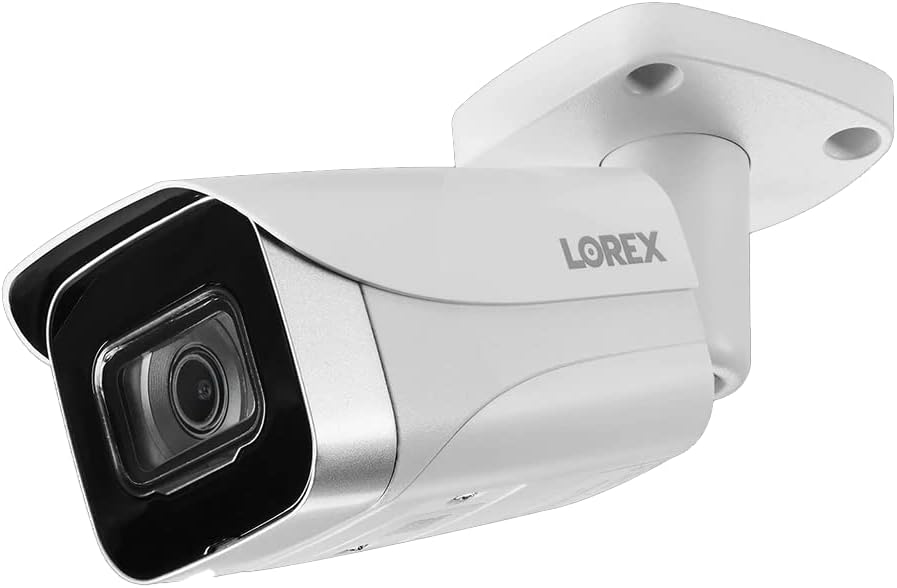
We handled four metal cameras, mounting hardware, the 2TB NVR, PoE ports, and all the necessary cables. Each camera comes with mounting brackets, screws, and a small cover to protect the cable connection. The first thing we noticed was the weight of the cameras—solid aluminum housings that feel designed to withstand more than a mild storm.
On the software side, the initial setup through the Lorex Home app was straightforward. The app guided us through adding the NVR, connecting to our network, and giving each camera a name. There was a moment of quiet satisfaction when the first camera image popped up in 4K—clarity that makes misread license plates seem like a trivial problem to solve.

Design and Build Quality
We like devices that look like they belong on the property for years; the Lorex metal cameras strike that balance. The aluminum casing creates a tangible sense of durability, and the IP67 weatherproof rating underscores the promise that these units can withstand rain, snow, and dust.
There’s a utilitarian elegance to the cameras: no flashy LEDs screaming for attention, no plastic that flexes unnervingly. The entire system reads as designed for longevity rather than disposable convenience.
Video Quality
We spent long afternoons testing the cameras across a variety of scenes—sun-washed driveways, shadowed porches, and the backyard in late dusk. The 4K ULTRA HD resolution is not just marketing copy; it translates into real, noticeable detail. Faces retain identity at a distance, and textures—wood grain, brick mortar, fabric—register with surprising precision.
There’s a sense that the camera wants to be truthful about the scene. We could read text on a delivery box from several meters away and make out the manufacturer’s label on a car without squinting. In a household where small details matter, that level of clarity matters.
4K Ultra HD: Clarity and Detail
We observed that the 4K resolution offers both immediate practical benefits and a slower, cumulative one. Immediately, we could resolve license plates, read labels, and identify people. Over time, the extra resolution felt like better storytelling—motion, posture, and intention in a recording became more legible.
If there is a limit, it is not in resolution but in perspective. A single 4K camera doesn’t create a broader field of view; it provides depth and nuance within its frame. We still had to think about where to mount each camera to capture the moments that mattered most.
Color Night Vision: Nighttime Performance
The Color Night Vision feature is the kind of technological flourish that quickly becomes practical. Many cameras turn night scenes into monochrome abstractions; the Lorex system instead preserves color in low-light situations when light sources are available. We watched as porch lights, street lamps, and even residual twilight allowed us to see clothing colors, painted surfaces, and the warm tone of a wooden fence.
In near-total darkness, the cameras switch to infrared and the image becomes monochrome as expected, but for most residential environments the Color Night Vision is a meaningful upgrade. It reduces the emotional distance of nighttime footage; a visitor at dusk looks like a person and not a silhouette.
This image is property of Amazon.com.

Cameras and Hardware
The hardware contributes to a sense of reliability. The cameras’ aluminum shells feel resolute, mounting brackets are robust, and the weatherproofing is reassuring.
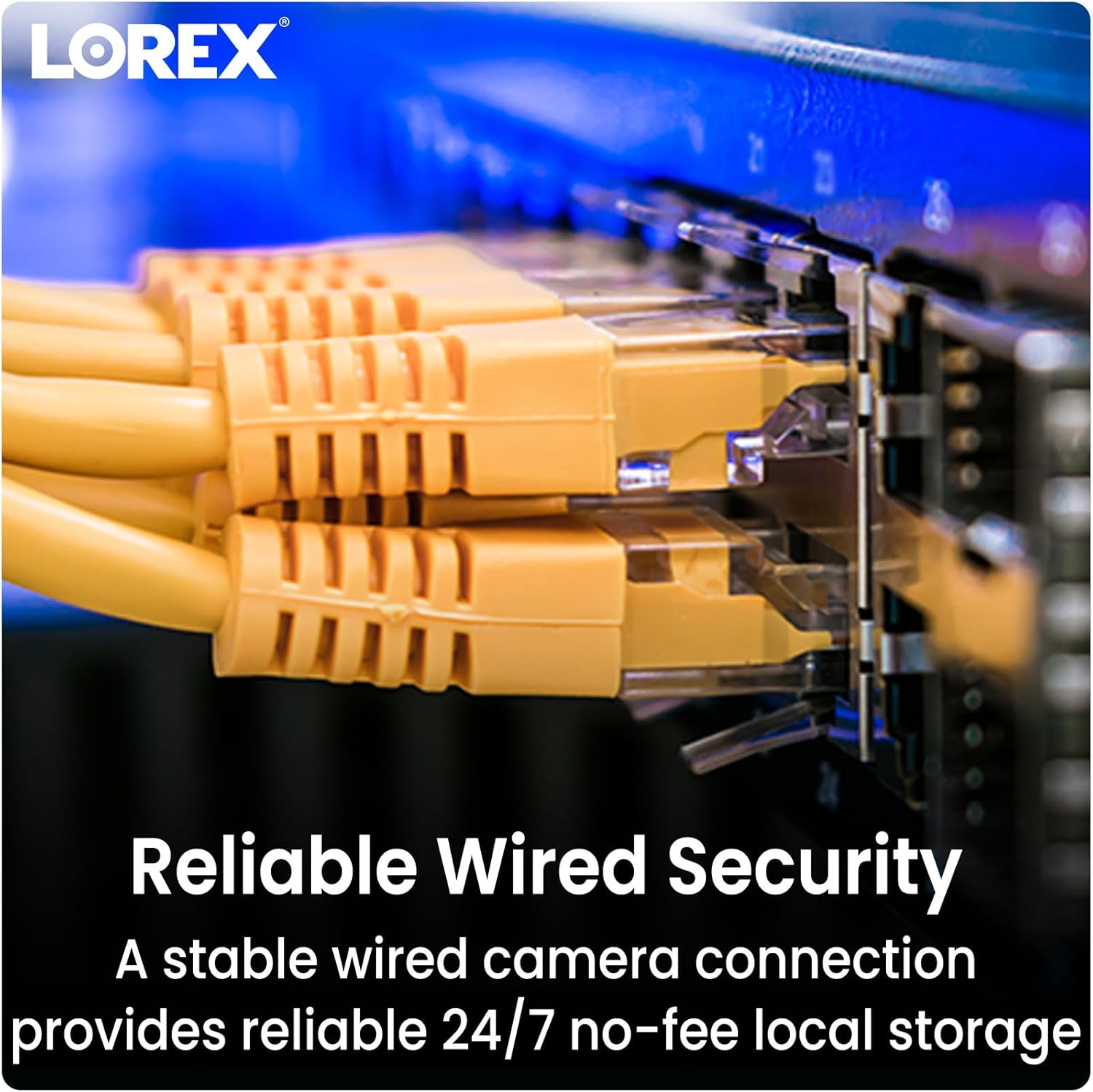
We liked that the system is purpose-built: PoE cameras that receive power and data through the same cable, paired with an NVR that stores footage locally. This arrangement felt more secure to us than systems that depend entirely on cloud storage and gave us confidence that a temporary internet outage wouldn’t leave us blind.
Metal Cameras and Weatherproofing (IP67)
The IP67 rating means the cameras are sealed against dust and can handle immersion up to one meter. For our needs—porches, eaves, and driveway coverage—that’s more than sufficient. The metal bodies dissipate heat well and give a professional look that fits many architectural styles.
Beyond the numerical rating, what mattered to us was how the cameras behaved over months. Rain, wind, and the occasional sleet had no visible effect on the housings or the image clarity. That, combined with the straightforward mounting hardware, made the cameras feel like permanent fixtures rather than seasonal tools.
PoE Wired System and NVR with 2TB Storage
PoE simplifies installation in meaningful ways. We ran single cables to each camera, eliminating the need for separate power runs. The cameras draw power and transmit video over the same cable, which reduces clutter and simplifies troubleshooting.
The included 2TB NVR is adequate for many households. It supports eight channels, so the four cameras we used left room for expansion. The local storage model appealed to us because it keeps data in our control. Bandwidth demands remained reasonable, and the NVR’s interface for playback and management is responsive.
Fusion Connectivity and the Lorex Home App
The Lorex Fusion technology allows limited connectivity with compatible WiFi devices. In practice, this meant we could link a couple of wireless devices to the system while keeping primary feeds wired and reliable.
The Lorex Home app is the interface through which we communicate with the system when away from the house. It provides live views, playback, alerts, and configuration options. We liked the app’s balance of accessibility and depth: basic users can quickly get what they need while power users can fine-tune.
Fusion Technology and WiFi Device Support
Fusion technology intends to offer a bridge between wired stability and the convenience of wireless. We appreciated the option to connect up to two compatible WiFi devices, which can act as auxiliary cameras or sensors without disturbing the PoE backbone.
Truthfully, we found the sweet spot in a hybrid approach: keep the critical cameras wired for reliability and add wireless accessories for convenience. Fusion isn’t a revolutionary reconception; it’s a thoughtful convenience that respects the strengths of both wired and wireless worlds.
Lorex Home App: Remote Monitoring and Usability
The Lorex Home app gives us a sense of being present without being intrusive. The live-view stream is quick to initialize, and switching between cameras is fluid. Playback controls are intuitive, with a timeline for scrubbing and thumbnails for quick navigation.
Notifications are configurable, and we appreciated being able to set zones and sensitivity to reduce false alerts. The app also integrates with the NVR for local playback, reducing our reliance on cloud streaming and preserving bandwidth.

This image is property of Amazon.com.
Motion Detection and Smart Features
Motion detection is where a system transitions from passive recording to something that feels responsive. We set motion zones around parking areas and the back gate to avoid alerts from tree branches along the driveway.
The system’s motion detection was timely and accurate in most situations. We did find that extremely subtle movements—like a wind-blown plastic bag—could occasionally trigger alerts, but those instances were manageable with sensitivity adjustments.
Motion Detection Accuracy
We tested motion detection under several conditions—heavy rain, bright sunlight, early morning shadows—and the system generally focused on the relevant motion. Vehicles and people produced clear alerts, while animals sometimes required sensitivity tuning to avoid frequent notifications.
What matters most is not the absence of false positives; it’s the system’s ability to be trained to our environment. We appreciated the configurable motion zones and the responsiveness of the detection engine.
Alerts, Playback, and Search Features
Notifications arrived via the Lorex Home app and contained thumbnails for quick assessment. When we received an alert, tapping it brought us to the exact moment of the event, and the playback scrubber allowed us to move around efficiently.
The NVR’s timeline and search tools are serviceable, with event markers for detected motion. We would have liked some additional indexing features for rapid sorting through long stretches of quiet footage, but in daily use the tools were sufficient and straightforward.
Installation and Wiring
We installed the cameras under eaves, on garage corners, and facing the driveway. The flexibility of PoE allowed us to concentrate power and data at the NVR without needing local power outlets at each camera location.
There were small moments of practical problem-solving—routing cable through soffits, sealing holes, and testing angles—but nothing required professional intervention. The system is designed for homeowners willing to do a moderate amount of DIY work.
PoE Convenience and Cable Runs
PoE is the hero that simplifies much of the physical installation. Running a single Cat5e/Cat6 cable to each camera is far easier than powering and networking separately. The PoE injector is built into the NVR, which eliminates the need for separate power adapters at each camera.
For us, the major consideration was planning cable routes to keep runs neat and protected from weather and tampering. With a bit of forethought, the process was efficient and tidy.
Mounting, Positioning, and Durability
Mounting the cameras required drilling and a mounting template that comes with the hardware. We found positioning to be the most interesting part; a few degrees can change what is captured dramatically. We spent time adjusting tilt and pan to ensure doorways, driveways, and yard gates fell into clear view.
After several months outdoors, we saw no signs of corrosion or loosening. The metal housings and mounting hardware maintained alignment despite weather and occasional gusts.

This image is property of Amazon.com.
Storage and NVR
The 2TB NVR stores footage locally, which we liked for both privacy and reliability. The NVR has eight channels and gives room to expand beyond the four cameras included in the kit.
We tested retention times and found that 2TB can hold a respectable amount of footage depending on resolution and recording modes. Continuous 4K recording will eat storage faster than event-based recording, so thoughtful recording schedules are essential.
2TB Capacity in Practice
With four cameras recording primarily on motion, the 2TB drive provided several weeks of retention before recycling older footage. If we switched to continuous recording at 4K, retention drops significantly. For most households, a mix—continuous for critical areas and motion-triggered for others—offers a balanced approach.
The NVR’s interface for managing storage is straightforward. We could set overwrite options, schedule recordings, and monitor disk health. The 2TB unit feels appropriate for a typical house, but those with very active properties or high-resolution continuous archives may want to consider larger drives or external storage options.
Backup, Footage Retention, and Management
Local storage gave us confidence that our footage was in our custody, but we also appreciated the option to offload critical clips. Exporting clips through the NVR or app is simple, and the system supports external backup if we choose to archive important events.
We made a habit of exporting delivery confirmations and notable events to external drives for long-term keeping. The process is not automated by default, which means there is some responsibility on our end to manage important footage.
Performance in Real-World Scenarios
We put the system through realistic conditions: busy arrival and departure times, late-night visitors, deliveries left at the porch, and wildlife passing through the yard. The Lorex system performed reliably, consistently capturing events with clarity.
There are everyday instances where a security system becomes less about alarm and more about record-keeping: verifying a package delivery, checking on a gardener, or watching how the light moves across the yard. The Lorex camera system became a small companion in those domestic stories.
Daytime Performance
In full daylight, the cameras are excellent. Dynamic range handled backlit scenes well, preserving face detail even when a subject stood in shadow. Colors remained natural and true without oversaturation. We were able to identify people, read small text, and observe motion with crispness.
Nighttime and Low-Light Scenarios
At night, when ambient light is present, Color Night Vision provides reassurance that we can see more than silhouettes. When ambient light is absent, infrared kicks in and gives a clean monochrome image. Across conditions, the cameras maintained a dependable image without dramatic blooming or noise.
There were edge cases—very distant objects at night could be hard to identify as detail naturally diminishes with distance and light—but for everyday security needs, the night performance is more than adequate.
Rain, Snow, and Seasonal Conditions
We left a camera pointing toward an exposed area of the yard to see how precipitation would affect imagery. Heavy rain slightly reduced clarity, as expected, but did not distort motion detection to the point of uselessness. Snow added contrast and allowed us to watch footprints and vehicle tracks, which was unexpectedly useful.
The IP67-rated housings held up with no water ingress, and the cameras did not shift position from ice or wind. In our experience, durability matched the initial promise.

This image is property of Amazon.com.
Privacy, Security, and Data Considerations
We are always mindful that a security system introduces new responsibilities. Local storage on an NVR reduces third-party exposure, but the device still connects to our network and, through the Lorex Home app, to remote access. We took several steps to safeguard our data: strong, unique passwords, network segmentation for security devices, and regular firmware checks.
Network Security and Local Storage
We isolated the NVR on a separate VLAN to minimize lateral movement on our network if another device were compromised. We enabled two-factor authentication where available on the app and kept firmware up to date. The local storage model meant that, in the event of a network outage, the cameras continued to record to the NVR.
Security is a shared responsibility between the device maker and the homeowner. Lorex provides updates and options, but we found that proactive configuration and sensible network hygiene were essential.
Privacy Considerations and Legalities
We thought carefully about camera placement to respect neighbors’ privacy. Avoiding direct lines of sight into private windows and using customizable motion zones helped mitigate potential issues. Depending on local laws and neighborhood norms, signage or disclosure may be appropriate when cameras cover shared spaces.
The system’s focus on local storage simplifies some concerns about cloud data retention, but remote access still creates vectors that require careful management.
Pros and Cons
We find that the strengths of this system are its image quality, durable hardware, and sensible balance between wired reliability and limited wireless flexibility. The PoE setup makes physical installation cleaner, while the Lorex Home app keeps remote monitoring practical.
On the flip side, very high-resolution continuous 4K recording consumes storage quickly, and some advanced indexing or automated cloud backup options could be more robust. We also noted that while the app is user-friendly, power users might want deeper analytics than are offered out of the box.
What We Liked
- 4K resolution that provides real, usable detail for identification and verification.
- Color Night Vision that preserves nighttime nuance when ambient light exists.
- Solid metal camera housings with IP67 weatherproofing for a durable outdoor presence.
- PoE design that simplifies cabling and improves reliability.
- Local 2TB NVR storage that gives us control over our footage and supports expansion up to eight channels.
- Lorex Home app that makes remote viewing and alerts straightforward and responsive.
What We Wished Were Different
- Continuous 4K recording requires large amounts of storage; larger default NVR drives or easier cloud-archiving options would help.
- Some advanced search and indexing features would speed up forensic reviews.
- Fusion’s WiFi device support is limited to two devices; greater flexibility could help some hybrid setups.
- Automatic offsite backups for important clips aren’t built in by default and require manual export or third-party solutions.
This image is property of Amazon.com.
Comparison with Alternatives
When compared to camera systems that rely heavily on cloud storage, this Lorex kit feels more like a traditional, resilient choice. It contrasts with all-in-one cloud systems that may be easier to set up initially but can become costly over time due to subscription fees.
Against higher-end professional CCTV solutions, Lorex offers an approachable price point with a home-minded balance of features and durability. Versus budget cameras with plastic housings and inconsistent weatherproofing, the metal-body, IP67-rated Lorex cameras feel like an investment rather than a temporary fix.
We found that for homeowners who prefer local control without sacrificing modern conveniences like app-based access, this system hits a comfortable middle ground.
Who Is This For?
We see several groups of users who will find the Lorex Fusion 4K system especially well-suited.
Families and Homeowners
Families who want clear, dependable footage will appreciate the 4K clarity and reliable night performance. The system is especially useful for verifying deliveries, monitoring entrances, and keeping an eye on outdoor areas where children or pets play.
Small Businesses
Small business owners who need a durable, local recording solution will find the PoE backbone useful. The eight-channel NVR allows for future expansion, and the metal cameras are robust enough for exterior-facing surveillance in harsh weather.
We think it also suits anyone who prefers to retain custody of their footage and reduce dependence on monthly subscription services.

This image is property of Amazon.com.
Final Verdict
We find the Lorex Fusion 4K Security Camera System w/ 2TB NVR – 8 Channel PoE Wired Home Security System w/ 4 Metal Cameras – Motion Detection, Color Night Vision, Weatherproof Outdoor Surveillance to be a reliable, feature-rich choice for homeowners and small businesses. It combines excellent image quality with resilient hardware and a sensible approach to storage and connectivity.
If our priority is clear, local control and image fidelity, this system delivers. If we require sophisticated cloud analytics or unlimited wireless expansion, we would look elsewhere or augment the system. For the everyday needs of most properties—monitoring driveways, protecting entryways, and maintaining a watchful but unobtrusive presence—this Lorex system strikes a satisfying balance.
Quick Specs Table
| Feature | Details |
|---|---|
| System Name | Lorex Fusion 4K Security Camera System w/ 2TB NVR (8 Channel PoE) |
| Cameras Included | 4 Metal Cameras |
| Resolution | 4K ULTRA HD |
| Night Vision | Color Night Vision (with infrared monochrome in very low light) |
| Weather Rating | IP67 |
| Housing | Aluminum / Metal |
| Connection Type | PoE (Power over Ethernet) |
| NVR Storage | 2TB (local) |
| Channels Supported | Up to 8 channels |
| App | Lorex Home App (remote viewing & notifications) |
| Motion Detection | Configurable motion zones & sensitivity |
| Fusion Support | Connectivity for up to two compatible WiFi devices |
| Typical Use | Home, small business, outdoor surveillance |
This image is property of Amazon.com.
Practical Tips from Our Experience
- Plan camera placement before drilling: the difference between an unobstructed doorway and a partly blocked view is often a matter of inches.
- Use motion zones to avoid alerts caused by trees, roads, or regular animal traffic. That reduces notification fatigue.
- Balance continuous recording and motion-triggered recording to extend storage life. Use continuous only for the most critical camera positions.
- Keep firmware updated and use strong, unique passwords for the app and NVR. On-network segmentation helps protect other devices.
- Export important clips to an external drive for long-term archiving; local storage is reliable, but physical backup brings extra peace of mind.
Closing Thought
We find that security systems are most successful when they fold seamlessly into the rhythms of a household—observant without being invasive, present without being intrusive. The Lorex Fusion 4K system manages that quiet balance. It records the ordinary moments that matter, and when something out of the ordinary happens, it gives us the detail we need to understand it. That kind of clarity—technical and human—matters to us.

Disclosure: As an Amazon Associate, I earn from qualifying purchases.