
?Have you ever stood in a room and felt the color press against you like a mood, patient and inevitable, asking you to decide how the rest of your life will look for the next few years?

This image is property of Amazon.com.

First impressions of BACKDROP | Premium Interior Paint | Semi-Gloss Finish for Trim & Doors | Self-Priming, Low VOC, Green Wise Certified | SATURDAY ON SUNDAY – Dark blue-gray with a hint of green | 0.5 Gallon
You open the can and you feel small ways the world shifts—the soft clack of the lid, the faint perfume of chemical promise, the weight of pigment. This paint positions itself as something conscious: premium, self-priming, Green Wise Certified, and specifically named SATURDAY ON SUNDAY, which already tells you it’s intentionally human, as if the color came from a weekend that refuses to end.
Unboxing and packaging
The can looks like it’s been designed by someone who cares about how you touch things; the lid snaps and opens without tools, and the pour spout is clean. You notice the convenience right away, the kind that makes you trust it before you even paint: no jagged edges, no sticky rim, a lid that returns with purpose.
The name, the color, the first sight
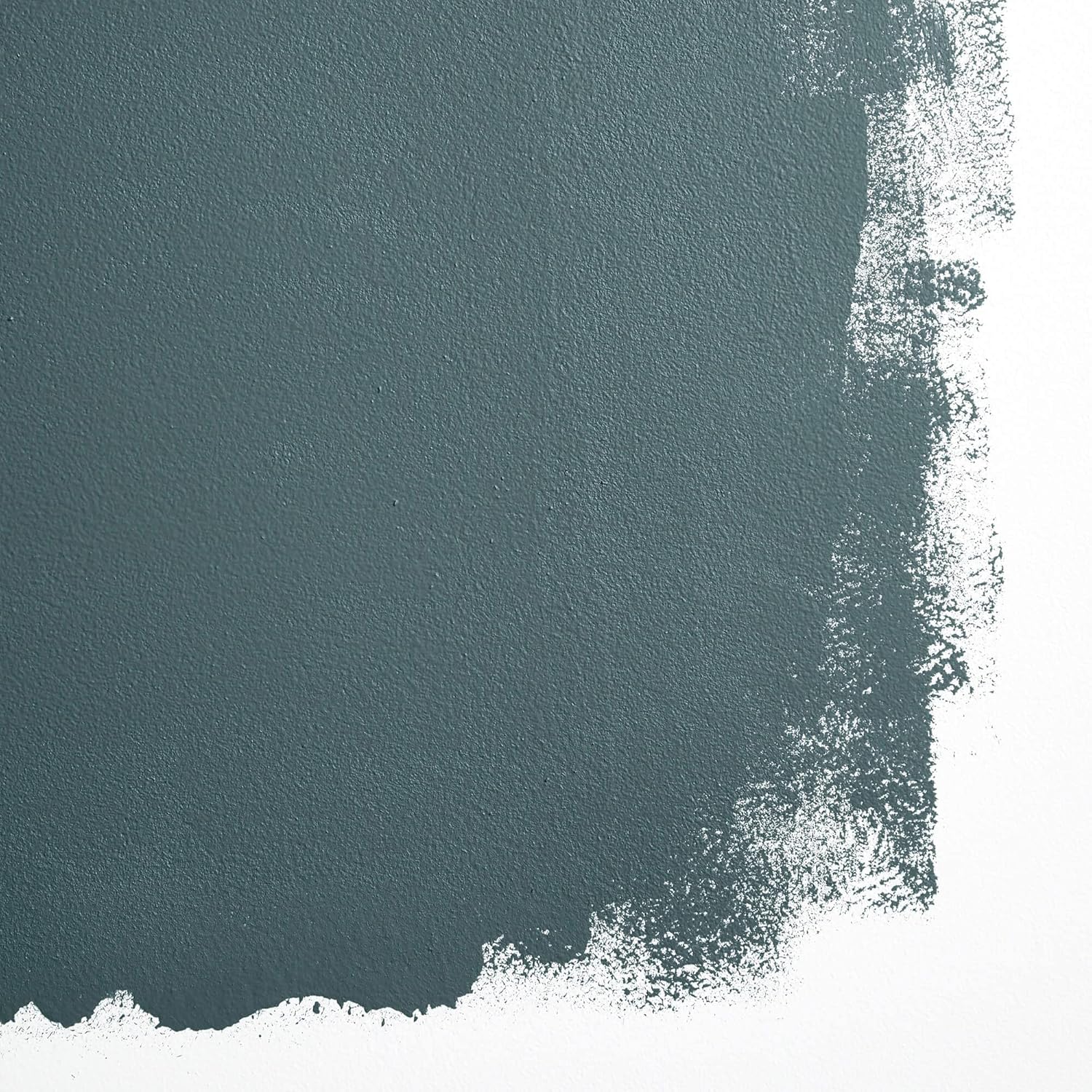
SATURDAY ON SUNDAY reads like a memory of light—dark blue-gray with a hint of green—and that description proves true in a way that feels patient rather than flashy. You’ll see the color shift with the sun: some mornings it leans ocean-blue, some evenings it leans forest-green, and this variability is exactly what gives it personality rather than indecision.
BACKDROP | Premium Interior Paint | Semi-Gloss Finish for Trim & Doors | Self-Priming, Low VOC, Green Wise Certified | SATURDAY ON SUNDAY - Dark blue-gray with a hint of green | 0.5 Gallon
What the product claims and what that means to you
You can read the label and take the claims at face value, but the useful thing is how those claims translate into your work and living experience. Each claim—self-priming, low VOC, 30% sheen, quick dry—carries practical implications for how you plan your time, your ventilation, and whether you’ll brave painting on a rainy weekend.
Semi-gloss sheen and its implications
Semi-gloss at about 30% sheen means the finish is shiny enough to reflect a soft gleam but not so much that it becomes mirror-like or garish. You’ll find this ideal for trim and doors where durability matters; it’s the level of shine that says “wipeable” without shouting.
Self-priming: when you can skip a step
Self-priming can save you a coat, a tool, and an hour of fretting over whether your previous paint will show through. If your walls or trim are in reasonable condition—not heavily stained, not radically different in color—you’ll often be able to start painting immediately, which relieves the ordinary anxiety of renovation.
Low VOC and Green Wise Certified: living with paint
This paint is presented as being made without formaldehyde and other off-gassing substances, and it’s certified Ultra Low VOC. For you, that means less lingering odor, a safer indoor environment for children, pets, or someone sensitive to smells, and the peace of knowing the paint aligns with a cleaner lifestyle.

This image is property of Amazon.com.

Color behavior: how SATURDAY ON SUNDAY performs in real spaces
Colors are not static; they are conversations between surfaces, light, and memory. SATURDAY ON SUNDAY is a subtle conversationalist. You’ll notice it changes tone depending on the day, the bulb, and the mood of the room, and that chameleon quality can be a friend or a problem depending on how decisive you want your palette to be.
How natural light shifts the hue
In northern light, the color tilts to slate-blue and feels cool and quiet, almost like a winter afternoon; in south-facing rooms it may read greener, warmer, and more living-room friendly. You’ll want to sample on large swaths of wall, not just a paper chip, to see how it anchors the furniture you already own.
How artificial light alters perception
Warm incandescent or warm LED bulbs will pull that green undertone forward, giving the paint a soft, enveloping quality. Cooler LEDs emphasize the blue-gray, lending a slightly more formal or modern mood. You can change the room’s emotional temperature simply by changing the lampshade.
Sheen and surface use: where semi-gloss shines
Semi-gloss is meant for the places that see hands, steam, and the occasional scuff: trim, doors, bathroom walls. You’ll appreciate how forgiving this finish is when you’re wiping toothpaste splatter or rushing with a damp cloth to remove a fingerprint.
Trim and doors: durability and character
Trim painted in semi-gloss reads crisp and intentional; the same coat on doors highlights edges and profiles in a way that feels architectural. If your home has mouldings, chair rails, or six-panel doors, this sheen will frame them with calm definition rather than aggressive brightness.
Bathrooms and moisture-prone rooms
Because semi-gloss wipes clean and repels some moisture, you can use it in bathrooms (though you’ll still want proper ventilation). You’ll find that steam doesn’t sting the finish the way it might a flat or eggshell, so the long-term wear is better on average.

This image is property of Amazon.com.

Application and handling: how the paint behaves on brush and roller
You can tell a paint is kind to the hand when the brush strokes level out instead of screaming for attention. This paint is formulated for smooth application; whether you choose a synthetic brush for trim or a short-nap roller for doors and walls, it spreads evenly without a fight.
Brushing and cutting in
When you cut in around ceilings or hardware, the paint responds with a near-forgiving clarity—you’ll see crisp lines without the paint pooling or stringing excessively. You still need steady hands, but the product helps you get confident edges faster.
Rolling and coverage
Rolled coats lay down a consistent film that conceals minor imperfections and offers good hide. The pigment is intense enough that one or two coats can often achieve the finish you want, especially on neutral or lightly colored substrates.
Coverage, waste, and realistic expectations
The label promises that 1 gallon covers about 400 square feet, which is a good, professional-grade claim. Since the product you’re looking at is 0.5 gallon, you should expect roughly 200 square feet of coverage under ideal conditions, and you should plan for variations depending on surface texture, porosity, and how many coats you want.
How to calculate what you need
If you’re painting doors and trim, measure linear feet and surface area; for walls, calculate square footage minus large windows and doors. You should add 10–20% to your estimate for touch-ups, absorption, and texture differences. If your walls are darker or have stains, you may need a primer or an extra coat.
When one coat is enough and when it isn’t
Self-priming surfaces work best when the underlying color is not drastically different and when walls are smooth and clean. If you’re trying to cover a bright color or tannin stains, you should not expect a single coat to do the job; in those cases, a dedicated primer or additional coats will be essential.

This image is property of Amazon.com.
Dry time and recoating windows
Fast drying is one of the product’s selling points: touch dry at around 60 minutes and recoat in 3–4 hours. That pace is comfortable if you’re working room by room and want to avoid a weekend that stretches into a week.
What “60 minutes to touch” means for your schedule
When the can says “touch dry,” it means you can lightly touch the surface without leaving a fingerprint, not that you can move furniture and be done. You’ll still want to obey the recoating window to avoid lifting or compromising the finish.
Recoating and layering techniques
If you plan to do two coats in a day, the 3–4 hour recoat time makes it plausible. You’ll want to check the paint’s tackiness before applying another coat, and you should work from the top down so drips don’t become your last-minute nemesis.
Clean up, tools, and storage
The can’s “easy open & close” and clean pour design are small mercies when you’re thinking about cleanup. Brushes wash out well with soap and water because the paint is acrylic, and the lid is engineered so you won’t pry it with a screwdriver.
Storing leftover paint
Because the lid closes cleanly and the can seals well, storing a half-gallon for touch-ups is a realistic idea. Keep it in a cool, dry place and protect it from extreme temperatures; if you store it properly, you’ll be able to refresh scuffs months later with minimal fuss.
Tools that make the job easier
A high-quality synthetic brush for cut-in, a 3/8” nap roller for semi-smooth surfaces, and painter’s tape for crisp edges are your essential companions. You’ll find that investing in a few good tools pays dividends—less frustration, fewer stray marks, and cleaner lines.
This image is property of Amazon.com.
Performance over time: washability, stain resistance, and durability
The paint is designed to be stain resistant and easy to wash, which matters after the initial thrill of new color has worn off and daily life resumes with its coffee, crayons, and wet umbrellas. You’ll notice the finish resists scuffs better than flat paints and stands up to gentle scrubbing.
Cleaning marks and long-term resilience
When you wipe with a damp cloth and a mild detergent, the finish tends to come clean without dulling or removing pigment. Over months of careful wear, you’ll see less patina of fingerprints and scuffs than on lower-sheen paints.
Signs of aging and maintenance tips
All paints eventually show wear—door jams, handrails, and baseboards will be the first to reveal chips. You can touch them up with the stored half-gallon; because the paint is color-rich and consistent, touch-ups usually blend well if you’re careful about finish uniformity.
Health and environmental considerations
Green Wise Certified and Ultra Low VOC are not just labels; they’re promises about the air you breathe and the ethics of production. For households with children, pets, or chemical sensitivities, these certifications mean you’ll spend less time airing the room and more time enjoying it.
Low odor and immediate comfort
You’ll notice far less paint smell than with traditional oil-based paints or even some older latex formulations. That lets you return to the room sooner, and you can sleep in adjacent rooms without waking to chemical headaches.
Climate Neutral certification
Backdrop positions itself as the first Climate Neutral Certified paint company, which signals a commitment to offsetting emissions and sustainable practices. It’s a small thing that may matter to you if your choices are guided by environmental concern.

This image is property of Amazon.com.
A clear breakdown: specifications and quick facts
Below is a concise table so you can glance at the essential details without hunting through the can.
| Attribute | Detail |
|---|---|
| Product name | BACKDROP |
| Color | SATURDAY ON SUNDAY — Dark blue-gray with a hint of green |
| Sheen | Semi-gloss (~30% sheen) |
| Size reviewed | 0.5 Gallon |
| Coverage | ~400 sq ft per gallon (≈200 sq ft per 0.5 gallon under ideal conditions) |
| Dry time | 60 minutes to touch; 3–4 hours to recoat |
| Base | Premium acrylic resin |
| VOC/Certifications | Ultra Low VOC; Green Wise Certified; no formaldehyde; Climate Neutral Certified company |
| Application | Self-priming; brush/roller friendly; easy open/close can |
| Ideal uses | Trim, doors, bathroom walls, interior high-touch surfaces |
Pros and cons: what you’ll love and what to watch for
You can read a list of pros and cons and let that shape your expectations before you open the can. No paint is perfect for every setting; what counts is whether the imperfections matter for your project.
Pros
- Low odor and ultra low VOC make it comfortable to use indoors.
- Semi-gloss finish is durable and easy to clean, ideal for trim and doors.
- Self-priming saves time and simplifies prep in many cases.
- Color has nuance—rich, mutable, and sophisticated.
- Clean pour can design and easy-open lid reduce mess and frustration.
- Backdrop’s sustainability claims will matter to those who prioritize low-impact living.
Cons
- The color shifts with light, which can be lovely or confounding if you need a predictable, steady hue.
- If you’re covering very dark or stained surfaces, self-priming might not eliminate the need for a primer.
- A semi-gloss sheen can accentuate surface imperfections on flat walls, so prep work matters.
- The 0.5 gallon size means you’ll need to buy multiples for larger projects, and color-matching later requires careful storage.
This image is property of Amazon.com.
Comparison to other premium interior paints
When you put this paint next to other premium acrylics, what differentiates it isn’t just pigment or sheen but a wider attention to experience: easy-open cans, low odor, and certified environmental claims. You’ll notice that it competes with other high-end brands on finish and coverage, but it stands out if you value sustainability and convenience.
How it stacks up on finish and coverage
Coverage of 400 sq ft per gallon is consistent with professional-grade interior paints; the semi-gloss finish holds up like other acrylics at this level. You’ll find it performs on par with premium offerings in terms of washability and film strength.
How it compares on environmental commitments
Backdrop’s Green Wise and Climate Neutral certifications position it ahead of many competitors who still offer low-VOC lines but lack broader sustainability commitments. If you prioritize certifications beyond mere VOC counts, this will feel like a meaningful difference.
Practical scenarios: real-life rooms and use cases
You can imagine what this paint will do in specific rooms, and tailoring your expectations to those contexts will make the actual process peaceful rather than frantic.
Entryways and doors
Doors painted in SATURDAY ON SUNDAY become compositional statements—they accept fingerprints and scuffs but won’t look battered overnight. You’ll likely get compliments because the color is arresting yet restrained.
Kitchens and bathrooms
For bathroom trim and walls, semi-gloss is an obvious choice because it tolerates humidity better than flat paints; you’ll find that wipe-downs are simple and the finish remains stable. In a kitchen, it can hold up to splashes and stains near prep areas, though you’ll still want tile or other splashbacks where heat or grease are intense.
Bedrooms and living spaces
Here, the color’s subtle moodiness invites stillness; you can pair it with warm wood tones for coziness or cool metals for a modern contrast. You’ll want to watch how artificial light warms or cools the tone in the evening and select textiles accordingly.

This image is property of Amazon.com.
Tips for getting the best result
A few small procedural choices will change the outcome from good to unapologetically excellent.
Surface preparation
Clean the surface thoroughly and sand any rough bits for the semi-gloss to read cleanly. Even if the paint is self-priming, removing grease, dust, and flaking paint is crucial to long-term adhesion.
Technique and tools
Use a high-quality synthetic brush for quadrants and a medium-nap roller for smooth to semi-smooth surfaces. Work in natural light if possible, and paint a small test patch on the main wall away from windows to see how the color settles.
Color planning
Because SATURDAY ON SUNDAY shifts, paint a couple of large swatches and live with them for a full day under your lamps and natural light. You’ll save yourself the regret of an ill-timed purchase.
Common questions you’ll ask and honest answers
You will have small anxieties: Will it chip? Will it match the sample? Will guests like it? The answers are pragmatic.
Will it cover darker colors?
It will cover many substrates well but if you’re covering deeply saturated or dark colors, a separate primer may be necessary for best results. You shouldn’t assume one coat will be enough in those cases.
Is it safe for a nursery or a sensitive household?
Because it’s Ultra Low VOC and Green Wise Certified, it’s among the safer choices you can make. You’ll still ventilate the space, but the reduced odor will make painting a less invasive event.
How does it handle in humid conditions?
Semi-gloss is more resilient to humidity than flat finishes, but no paint performs miracles; ventilate and follow dry time recommendations, especially for bathrooms and basements.
Cost vs. value: is it worth it?
You’ll often pay more for paints that combine quality pigment, durability, and environmental standards. This paint’s price reflects materials, certifications, and design choices that save you time and worry. If you value clean application, strong coverage, and sustainability, the investment often feels justified.
When to spend more and when to save
You should spend on a paint like this for visible trim, doors, and high-contact areas where durability matters. For less visible spaces or temporary spaces, you might choose a cheaper alternative and accept more frequent repainting.
The long game: maintenance savings
Because of staining resistance and washability, you’ll likely repaint less often, which translates into long-term savings and fewer interruptions to your home life. That long-game perspective often tips the scale toward premium paints.
Final thoughts and recommendation
In choosing SATURDAY ON SUNDAY, you are choosing a color that will keep you company and change with you. You will find it companionable and quietly sophisticated, practical yet subtly narrative—the sort of color that collects stories rather than demanding them.
Who should buy it
Buy this paint if you want a durable, easy-to-clean finish for trim and doors; if you prefer low-odor, certified products; and if you appreciate a color that breathes with the light. It’s especially right for households that want fewer fumes, less mess, and a thoughtful aesthetic.
Who might hesitate
If you need a color that never shifts with light, or you’re covering a very dark wall without priming, you may feel frustrated. Also, if your budget is minimal and you’re painting whole rooms with little intention of longevity, a lower-cost alternative might fit better.
Choosing a paint is, in small ways, choosing a temperament for your home. BACKDROP | Premium Interior Paint | Semi-Gloss Finish for Trim & Doors | Self-Priming, Low VOC, Green Wise Certified | SATURDAY ON SUNDAY is a choice for someone who wants a faithful, low-odor, thoughtfully designed product that behaves like a good neighbor: reliable, a little mysterious, and quiet in its excellence.

Disclosure: As an Amazon Associate, I earn from qualifying purchases.