
?Have you ever finished a coat of paint and stood back, noticing a tiny imperfection on the trim that somehow commands the whole room’s attention?

This image is property of Amazon.com.

First impressions
You pick up the Purdy 144152215 Nylox Glide Paint Brush, 1-1/2 in., and the first thing you notice is a quiet confidence. The brush doesn’t shout about its pedigree; it feels like an object that has been made with a long, slow attention to detail. In your hands it is light but solid, the balance of handle and ferrule calmly promising the kind of control that matters when you’re working on narrow trim and window casings.
The packaging is straightforward and honest. There’s no over-the-top marketing copy—just the essentials and Purdy’s name, which carries a history that matters to you when you’re investing in tools you expect to last.
Design and build
The way a brush is made is the story that determines how it behaves under pressure — when you’re painting around a doorknob, or on a frosty morning when the paint is slower to set. This brush tells a certain story through its materials and construction.
Purdy’s choice of alderwood for the handle gives you a surface that’s warm to the touch and comfortable for long runs of work. The stainless steel ferrule is practical and reassuring; it resists corrosion and keeps the filaments where they belong. The craftsmanship is visible in the hand construction and the tidy finish.
Bristle construction and feel
You’ll appreciate the 100% nylon filaments because they give you a consistent, soft stroke. The bristles are tipped and flagged — techniques that refine the tip and increase the number of fine ends that hold paint. That’s why the brush leaves an ultra-smooth finish when you pull it along trim or a window sash.
When you run your finger (carefully) over the filaments, you feel a softness that doesn’t collapse; it springs back, which is exactly what you want. This resilience helps you maintain a crisp edge and good coverage without leaving brush marks that call attention to themselves.
Handle ergonomics and ferrule stability
The alderwood handle is shaped to sit naturally in your hand. You’re less likely to cramp during longer sessions because the handle strikes a balance between slender control and enough girth for a comfortable grip. The stainless steel ferrule is tightly swaged; it keeps the filaments held firmly in place and resists separation, even after repeated cleanings.
This is the kind of brush that makes you notice ergonomics not because they shout but because they let you work. The small, subtle design choices add up to a tool that feels slightly more refined than cheaper alternatives.

This image is property of Amazon.com.

Performance with latex paints and primers
Purdy markets this brush as designed for latex paints and primers, and that’s where it performs best. When you work with latex, the Nylox Glide seems to carry paint evenly and release it smoothly onto the surface. The flagged nylon filaments help create that delicate balance between paint holding capacity and release.
You’ll find that the brush is particularly adept at producing clean lines on trim, doors, and windows. It gives you predictable control for cutting in and for small, precise strokes. When working with primer, it helps create a consistently even base, smoothing out minor imperfections before the topcoat.
How it handles different latex paint sheens
Higher-gloss latex tends to reveal every stroke, and the Nylox Glide’s soft, well-tipped bristles do an admirable job of minimizing visible brush marks. With satin and eggshell finishes, you get consistent laydown and a smooth surface that reads as carefully finished rather than raw.
Although the brush is optimized for latex, you can expect acceptable performance with some water-based enamels. You should be cautious with extremely thick formulas or oil-based products, as those may require different bristle properties.
Ideal uses: where the brush shines
This brush is handcrafted in the USA with global materials and is particularly suited for interior trim work. You’ll find it excellent for narrow surfaces like window frames, door trim, and decorative molding. The 1-1/2 inch width is deliberate — it’s broad enough to cover a good swath of trim quickly, and narrow enough to give you control along edges.
When you’re painting windows or doors, the brush’s ability to hold paint and release it evenly helps you avoid drips while still moving with a confident stroke. That matters when you want a finish that reads like care rather than haste.
Specific tasks you’ll prefer this brush for
- Cutting in along discreet edges where precision matters
- Painting door frames and window casings that require both speed and a neat finish
- Applying primers to small areas before rolling larger surfaces
- Touch-ups where you don’t want to rework an entire panel
In these scenarios, the brush feels like it was made for the job rather than repurposed into it.

This image is property of Amazon.com.

Durability and longevity
You will notice that a good brush can feel like a partner on the job — it breaks in, it takes on a quiet patina of use, and it keeps performing. The Nylox Glide’s nylon filaments are designed for long-term performance. The tipping and flagging reduce splaying and maintain a fine edge after repeated washes.
The stainless steel ferrule resists rusting and loosening, which is one of the most common failures in lesser brushes. If you treat the brush with reasonable care — proper cleaning after each use and drying it properly — it should retain its shape and performance for many projects.
Cleaning tips that preserve the brush
You should clean the brush promptly after use. For latex paints, warm water and mild soap, followed by careful reshaping of the bristles and air drying with the bristles pointing down or hanging, will help keep the filaments aligned. Avoid letting the brush sit in water or solvent for extended periods.
A small ritual of cleaning and storage will repay you with many smooth coats of paint and a reliable tip for those moments when small details matter.
Comparing it to synthetic and natural alternatives
Purdy’s Nylox Glide sits between economy synthetic brushes and higher-end natural-hair brushes. Compared to cheap synthetic brushes, you’ll get better tipping, a smoother finish, and a more reliable tip. Compared to natural-hair (like badger or ox) brushes, you trade some of the softness and paint-holding capacity for easier care and better performance with water-based paints.
If you need a brush solely for oil-based enamels, natural bristles might still be your preference. But for most interior latex work, you’ll find the Nylox Glide gives you many of the benefits of a professional tool without the maintenance and limitations of natural hair.
Quick comparison summary
- Versus economy synthetics: higher quality tipping, smoother finish, longer life.
- Versus natural-hair brushes: easier to clean, better with latex, slightly less paint-holding capacity on thick oil enamels.
- Versus high-end Purdy models: this is focused on trim and small work; other Purdy lines may offer broader widths or specialty filaments for particular trades.
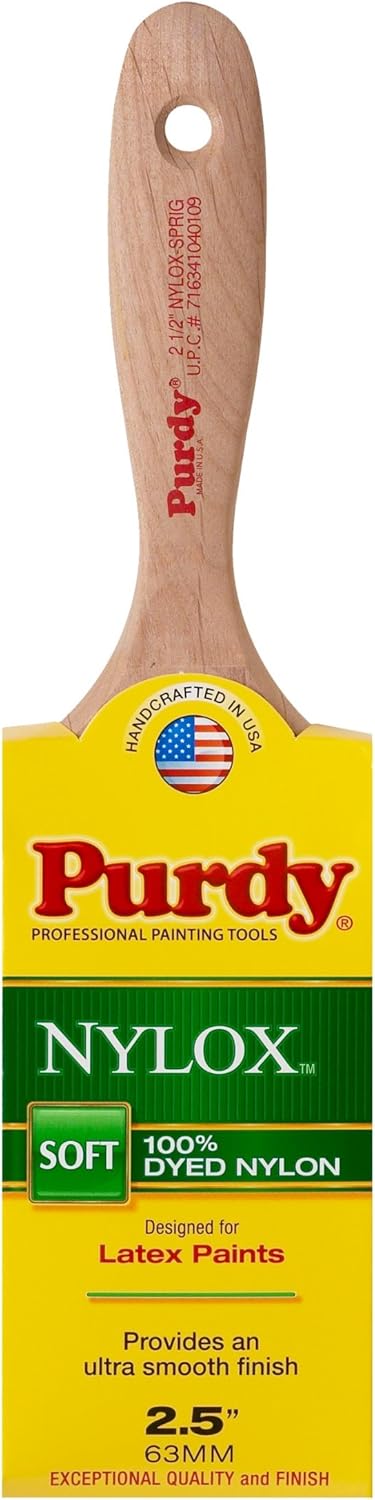
This image is property of Amazon.com.
A detailed breakdown table
Below is a table that breaks down the main specifications and what they mean for your work. This should help you quickly reference the brush’s capabilities and decide how it fits in your toolkit.
| Specification | Detail | What it means for you |
|---|---|---|
| Product name | Purdy 144152215 Nylox Glide Paint Brush, 1-1/2 in. | A specific Purdy model designed for trim and precision work |
| Bristles | 100% nylon filaments, tipped and flagged | Soft, resilient filaments that hold and release latex evenly for smooth finishes |
| Handle | Alderwood | Comfortable, warm-to-the-touch handle with good balance |
| Ferrule | Stainless steel | Durable, corrosion-resistant, keeps bristles secure |
| Recommended paints | Latex paints and primers | Best performance with water-based products and primers |
| Ideal uses | Interior windows, doors, trim | Trim work where precision and finish quality matter |
| Origin | Handcrafted in USA with global materials | Quality craftsmanship with international material sourcing |
| Width | 1-1/2 inch | A practical size for trim — balances speed and control |
How it feels in real-world use
You’ll notice this brush when you’re in the middle of a task — when you’re cutting in along a piece of crown, working a small panel on a cabinet, or repainting a window sash. The brush responds subtly to your hand: the tip bends with a controlled give, the body of the filaments supports a steady laydown of paint, and the handle allows you to make both swift strokes and delicate corrections.
There’s a quiet pleasure in using a tool that mirrors your intentions. You make a move; the brush does exactly what you expect, with little fuss and minimal correction required afterward.
The small moments that matter
- When you need to feather paint into a corner, the flagged tip helps keep edges soft and even.
- When you make a small corrective stroke, the bristles respond rather than leaving a blot.
- When you rinse the brush and hang it to dry, you see the filaments realign and keep their shape.
These are the little confirmations that tell you the brush is a reliable instrument rather than a disposable commodity.
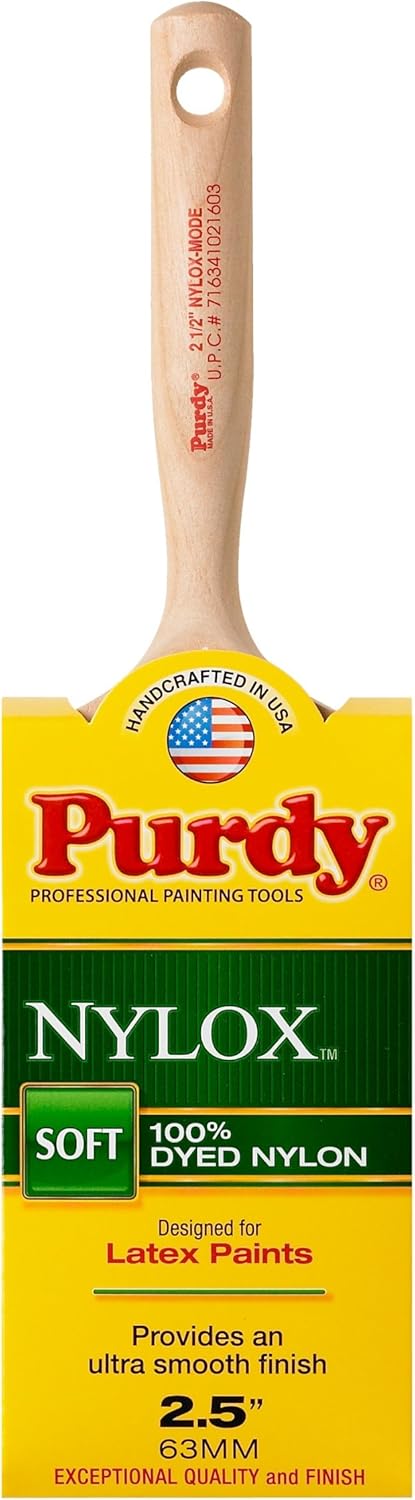
This image is property of Amazon.com.
Care and storage
How you treat a brush affects how long it lasts. You should be able to rinse latex from this brush with minimal fuss. Use warm water and a mild cleaner, work gently through the bristles, and avoid rough, drying methods that can splay the tip.
Store the brush either hanging or flat with the bristles unsupported by pressure. Avoid letting the handle rest under heavy objects or compressing the bristles against a surface; this will keep the filaments aligned and the tip performing well.
Tools and supplies to keep nearby
- A good brush comb or a gentle comb for separating bristles after use
- Mild soap (dish soap works) and warm water for latex cleanup
- A storage sleeve or hanging system to keep bristles safe and straight during drying
Consistency in care will pay off. The brush is designed to be reusable and steady, and your maintenance rituals will keep it that way.
Pros and cons
You like clarity when weighing tools. Here’s a concise list that helps you decide if the Purdy Nylox Glide is right for your work.
Pros
- Soft, tipped, and flagged nylon bristles for smooth finishes
- Optimized for latex paints and primers
- Comfortable alderwood handle with good balance
- Stainless steel ferrule resists corrosion and holds filaments firmly
- Handcrafted construction with Purdy’s long-standing reputation
Cons
- Not the ideal choice for heavy oil-based enamels (natural bristle may be better)
- Only one width here (1-1/2 in.); you might need smaller or larger sizes depending on tasks
- If you’re used to cheaper brushes, this feels like a premium step-up in cost and expectations

This image is property of Amazon.com.
Price and value considerations
You’re paying for craftsmanship and reliability with this brush. Purdy’s reputation is built on consistently good performance and tools that professionals rely on. When you factor in the brush’s longevity — if you take care of it — you’ll likely find that one Purdy brush replaces several cheaper brushes over time.
If you’re a DIY-er who takes pride in finishing, or a professional who needs tools that won’t let you down on a job, the value lies in the predictable results and the brush’s lifespan.
Is it worth the investment?
If your projects often include trim, doors, and windows and you care about a smooth, professional finish, the answer is yes. If painting is a rare weekend task for you and you’re less concerned about the last few microns of finish, a cheaper brush might suffice. But if results matter, this brush pays for itself in time saved correcting mistakes and in the satisfaction of a well-executed finish.
Who should choose this brush
You should choose this brush if you:
- Value precision on interior trim and windows
- Use latex paints and primers frequently
- Prefer a sturdy, comfortable handle and corrosion-resistant ferrule
- Want a brush that’s reusable, reliable, and built with care
If you’re painting large expanses of wall or ceilings, you’ll be better served by rollers and wider brushes, but for the moments when you need exactness, this is the brush you reach for.
Who might want something else
- If you mainly use oil-based enamels, natural bristle brushes may outperform nylon in certain circumstances.
- If you need a very wide brush for broad surfaces, consider different Purdy lines or broader widths in the Nylox series.

This image is property of Amazon.com.
Final thoughts
There’s a quiet humility to good tools. The Purdy 144152215 Nylox Glide Paint Brush, 1-1/2 in., doesn’t claim to transform your skill overnight. Instead, it gives you the control and steadiness you need to make what you already know how to do better. You get thoughtful materials, careful construction, and a design tuned to the small but crucial tasks of trim and interior detail work.
When you paint with this brush, you’ll notice not just the finish on the wood or plaster but the way your attention is rewarded. Small strokes become controlled gestures, and the room comes to feel like the sum of careful decisions. If you care about the finish, and if you want a tool that’s quiet, dependable, and made with craft, this Purdy brush is exactly the kind of object you’ll be glad to reach for.

Disclosure: As an Amazon Associate, I earn from qualifying purchases.